
Volunteer Roger Burns explores the story of the SV Halloween, one of the vessels investigated as part of the Metal Hulled Sailing Vessels Project.
What’s in a name? Sailors are often superstitious and being aboard a ship named Halloween, or Hallowe’en, as it was sometimes called, might conjure up thoughts of the macabre and supernatural, perhaps even a ghost ship, so why was it named thus? The owner, John Willis, apparently was a great fan of Robert Burns and named it “Halloween” after the poem by Rabbie Burns (Hallowe’en). But the Willis family also owned a shipping line, the John Willis Shipping Line, and many of his ships bore the names of places in his childhood Berwickshire. One of the ships in his line, also sometimes referred to in the media as the Victoria Line, was the famous Cutty Sark, named after a line in Burns’ Tam o’ Shanter (Tam o’ Shanter).
The Halloween was launched on 04 June 1870, completed six months later, but did not depart on its maiden voyage until 18 June 1872. The SV Blackadder was launched for Willis on 01 February 1870 by the same builder, Maudslay, Sons & Field, based at East Greenwich, London, as a sister ship to the Halloween. Maudslay, Sons & Field were located at Horseshoe Breach, the original name for the river inlet formed by a breach in the embankment before the 1620s, which later became known as Bay Wharf. Figure 1 makes clear the origin of the name given the horseshoe shape of the river at this location.
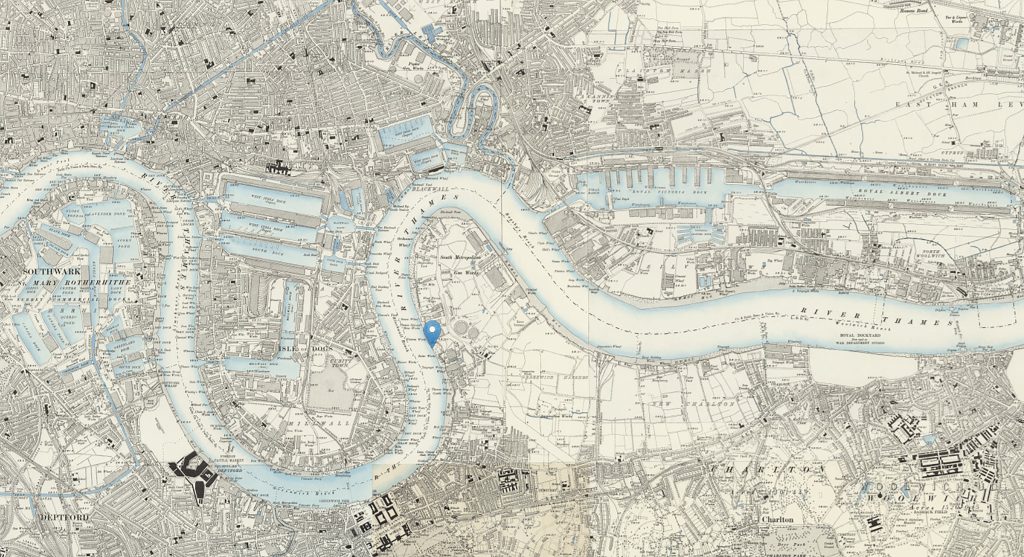
Figure 1: Location of the Maudslay, Sons & Field Shipyard at Horseshoe Breach
Source. Reproduced with the permission of the National Library of Scotland. CC-BY (NLS)
On the Blackadder’s maiden voyage, the mast fittings and rigging failed, and Willis commenced legal action against the builders—this action was protracted and effectively delayed acceptance by Willis of the Halloween; he did not accept ownership of the Halloween until just before it set sail on its maiden voyage. Possibly not the most auspicious beginnings for a ship!
The Halloween was an iron-hulled, two-decked, three-masted sailing vessel, with one bulkhead plus a poop and forecastle 66.02m long, with 10.73m beam and a depth of 6.25m (Figure 2). The tonnage was 971 gross registered tons/920 net registered tons, and unusually, the poop and forecastle were listed, in Lloyds, not with dimensions, but in measurement tons, respectively 53 and 35. It was equipped with one long boat, three other boats, classed AA1, and registered at London on 14 June 1872, and re-registered at Greenwich from 1873. Its international call sign was L.P.J.G.
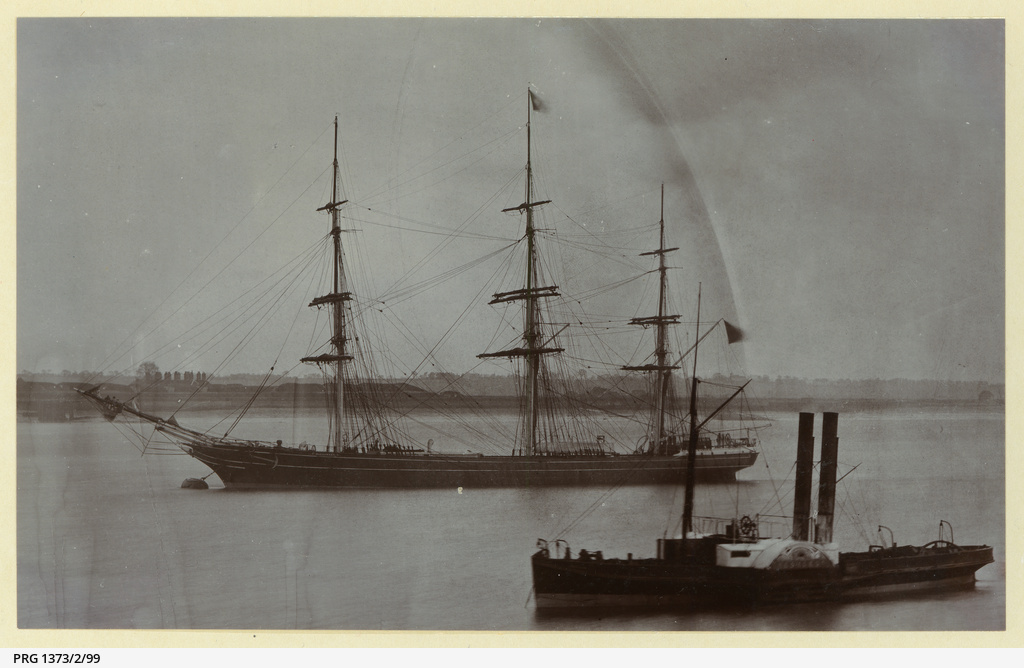
Figure 2: SV Halloween, undated, moored at Gravesend.Source. State Library of South Australia, PRG 1373/2/99. No known copyright restrictions. Part of A.D. Edwardes Collection
The Halloween voyaged consistently from London or Gravesend to Sydney except on one occasion in March 1876 when it departed Gravesend for Shanghai. From Sydney, it always returned to London, passing or calling at St. Helena until the summer of 1874, when it began calling at Shanghai from Sydney before returning to the UK. During the previous London to Sydney voyage, the Halloween encountered a very severe gale south of the equator, resulting in it losing the bowsprit, foretopmast, and maintopgallant mast, springing the lower foretop sailyard and mizentopgallant mast, and sustaining sail damage. The first of three masters, J. Watt, returning from Shanghai died the day after departing St. Helena in January 1876 for Gravesend, the chief officer taking over command.
The next voyage from Gravesend under a new master, R.W. Fowler, was direct to Shanghai and while moored there, the Union, a barque, when departing the quayside fouled the Halloween, the bowsprit of which was sprung in three places requiring careful repair. In the summer of 1880, instead of sailing from Sydney to Shanghai, the ship instead sailed to Hong Kong followed by Foochow (now called Fuzhou) before returning to Gravesend. In its next voyage to Sydney and Shanghai and Woosung, the master reported on arriving back at London, that from Woosung the Halloween had averaged 264 miles per day over a 10-day period. At London’s East India Export Dock, a fire started in the Halloween’s hold, requiring the attention of several ships to assist, culminating in the Fire Brigade flooding the hold. A good part of the cargo was damaged and much of the remainder was sold by auction at Mincing Lane, London, together with cargo from another ship, but the media did not distinguish which items derived from which ship. The following voyage returning to London from Sydney, the Halloween carried 3,969 bales of wool, but mostly, cargoes in voyages to the UK comprised tea, and the Halloween was sometimes referred to as a “tea clipper”.
The third master, R.F. Douton, assumed command in March 1883, and his first two voyages were Gravesend to Sydney, then returning to Gravesend. His third voyage was Gravesend, Sydney, Colombo, Tuticorin, via St. Helena to New York, returning to Sydney, followed by Newcastle [New South Wales], Hong Kong, and Foochow. From Foochow, Douton set sail for London on 13 August 1886 commanding 21 crew, with a cargo of 1,600 tons of tea in cases, insured for £40,000 (circa £4.67m in 20261). It passed Anjer on 04 October 1886, called at Ascension on 10 December 1886, and on 17 January 1887 went ashore with great force at Soar Mill Cove, South Devon. The Eddystone had been sighted at 17:30, the second mate was on watch, and had set a course which should have cleared Start Point by about 13 kilometres but two hours later the ship hit the land with great force near Soar Mill Cove.
Breached by the sea, which gutted the forecastle and cabin, the 22 crew members sought safety in the mizzen rigging. Despite burning blue lights, once firing a gun, and lighting a bonfire on deck, they were not spotted until the next morning. The uninsured ship broke its back, and over the next days lost the main mast, the mizzentopmast was broken, and the decks burst open on the port side. Soar Mill Cove was previously called Sewer Mill Cove, which is how it appears in Figure 3 showing the coast west of Bolt Head, near Salcombe.
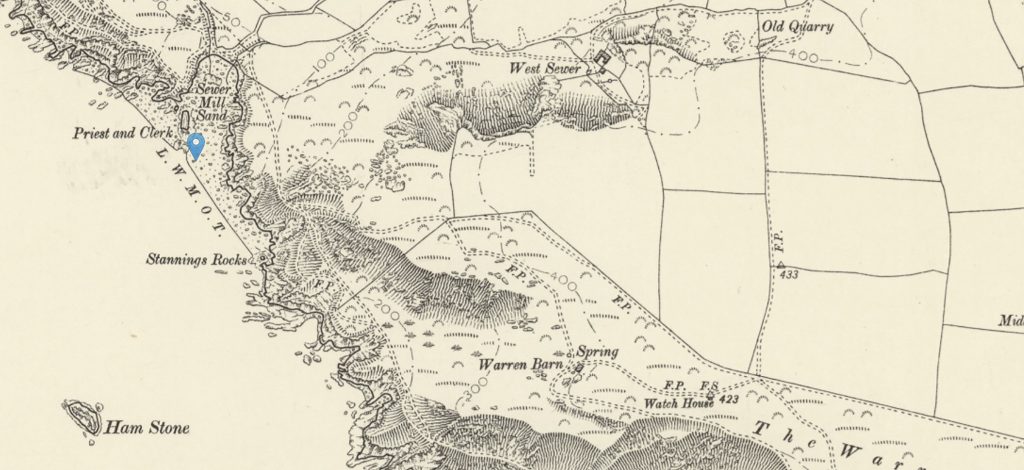
Figure 3: SV Halloween loss location. Source.CC-BY (NLS). Reproduced with the permission of the National Library of Scotland
The Alexandra, the Hope Cove lifeboat, was called out and saved 19 of the crew. Two swam and scrambled ashore and a German also scrambling ashore drowned. The Halloween continued to break up and by the end of January had broken in two and was strewn on the beach. Twenty-seven tons of the tea was salvaged, some dried at Plymouth, some at London, and was bought for just £300 (circa £35k in 2026), drinkable although having lost its strength.
Two months later in March, the Admiralty investigated why the Salcombe coastguard had not seen the Halloween aground sooner and concluded their inquiry by dismissing the coastguard who had been in charge, as well as a boatman who had neglected his patrol. Both actions make clear where the Admiralty felt the blame should be placed for the wrecking event!
Additional details about Robert Fowler, the second master, are available at the following link: https://submerged.co.uk/halloween/, including in the comments section. The web page also has first-hand information about dives made on the wreck, including images of it on the seabed. For an even clearer look at the wreck, you can also watch the brief video at the following link to see the wreck for yourself: https://www.youtube.com/watch?v=f4J_WatGJuA.
There is something eerie about a ship named Halloween meeting its end on a dark winter’s night against the rugged Devon coast. Named not for the supernatural, but for Robert Burns’ poem celebrating the traditions and folklore of Hallowe’en, the ship nevertheless came to an end that reads like a maritime ghost story. In January 1887, with the sea breaking through the hull and the crew clinging to the mizzen rigging through the night, the Halloween became a scene of real-life terror. Blue lights, a gun fired into the darkness, and a bonfire on deck failed to bring immediate rescue. By morning, 19 men had been saved by the Hope Cove lifeboat, two others had struggled ashore unaided, and the ship itself was already doomed.
Today, the Halloween is remembered through historical records, contemporary accounts, and the remains that survive beneath the waves. This story reminds us that behind every shipwreck lies a human drama and stories waiting to be told—and that sometimes, the most chilling maritime stories need no ghosts at all. This Halloween, spare a thought for the 22 men who faced that long night at Soar Mill Cove, and for the sailing ship whose name seems, even now, to belong to a darker tale of the sea.